 2018
2018
Dallas Museum of Art
Center for Creative Connections
Visiting Artist Residency
Neighborhoods of the Heart was a socially engaged, participatory art project developed at the Dallas Museum of Art by resident artist Ellie Ivanova. Grounded in the experience of Dallas residents, the project took on the concept of home as a visual and a shared social idea. It emerged at a critical moment for Dallas: rising real estate costs led to the displacement of long-standing low income communities within the city, complicated by the arrival of refugees from climate-related disasters in Louisiana and the influx of new residents relocating from other states. In this context of this urban transformation, “home” became a collective point of concern and negotiation across the city.
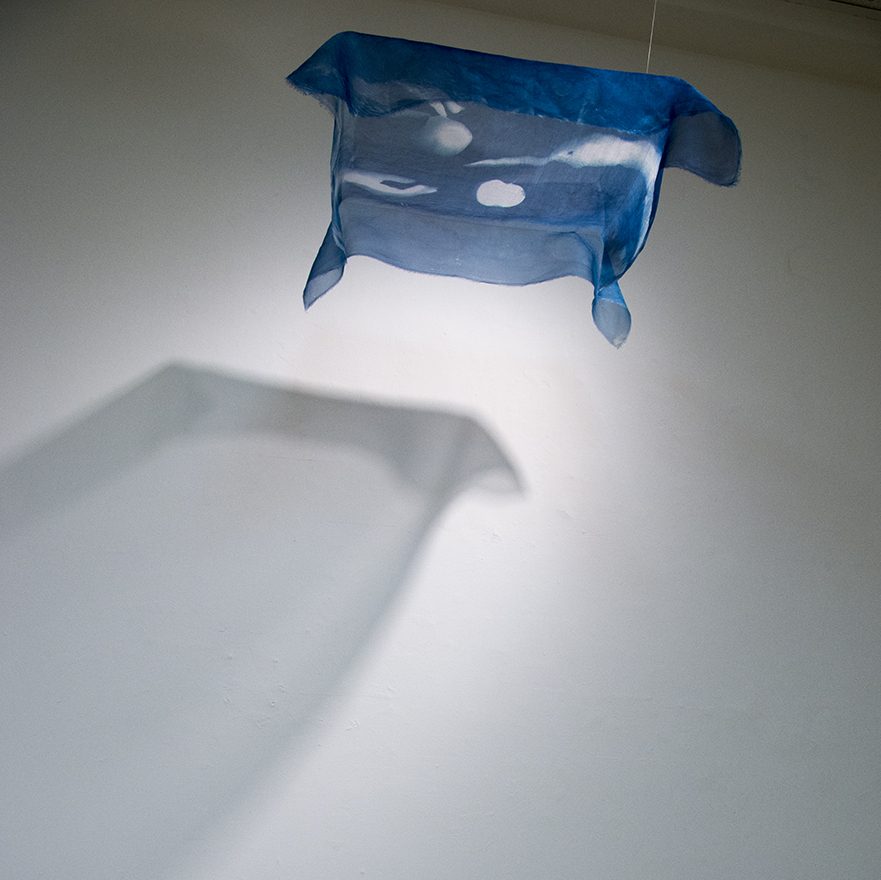
The project invited residents of the Oak Cliff neighborhood as well as visitors to the museum’s Center for Creative Connections. Participants visited a temporary exhibition of home and belonging and then they were asked to draw, on an acetate transparency, a home they had lost, their current home, or a home they dream for the future. These individual contributions were collected and transformed through the cyanotype process into a large shared, speculative neighborhood: an imagined map of architectural forms, memories and aspirations. Historically used for functional architectural imaging, the large size cyanotype was the best medium to recreate this fictional archive of emotional city geographies.
The spatial configuration of the maps was developed through conversations with the museum’s Teen Council, where discussions around urban planning and the politics of space shaped the collective visual outcome. This process reflected principles articulated by theorists of socially engaged art such as Suzanne Lacy, as a framework for social exchange rather than a discrete object. It was also inspired by Henri Lefebvre’s notion of the “right to the city,” affirming the importance of citizen participation in imagining and shaping urban life, as well as bell hooks’ understanding of home as a connection of memory and possibility.
By creating a space where people who might never have met could collaborate, Neighborhoods of the Heart functioned as a temporary commons: an space for collective dreaming and mutual recognition. The transformation of individual drawings into a unified cartography transformed private experiences of loss and belonging into a shared visual language. Ultimately, the goal of the project was in its affirmation of art as a civic practice through dialogue, collective authorship and social imagination. This made it possible for art to be seen as an active force in shaping how communities see their world.